I totally did not get the memo.
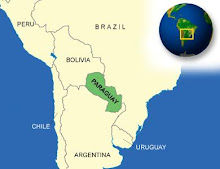
It is a freezing cold Sunday night in Paraguay, and I have been casually invited to a quinceanera- a big party in celebration of young lady's 15th birthday, the day she becomes a "woman." I put on my black pants, a nice green sweater, and even bought a new checkered scarf for the party. I wander my way over the church for the confirmation and walk past the 15 girls and 15 boys handing out bulletins for the event. The girls are in little hot-pink tube-top numbers and all the guys are wearing pink ties. I think nothing of it- clearly these are kinda like the bridesmaids for the evening. Lovely!
I take my seat at the side of a pew in the middle of the long sanctuary awaiting the start of service. As I look around, I start to feel a bit odd. Maybe I am just paranoid- but people seem to be looking at me strangely. Why would that be? I take another look around... since when were all the saints dressed in hot pink? As people arrive, naturally 30 minutes late as goes the hora-Paraguaya, I notice that everyone is in pink. Not just pink, they are all wearing full-out gala gowns! Oh geez... I am obviously underdressed. I send a text message of panic to my boyfriend asking what to do, "Just hold your head high, dear- nobody will say anything." I shoot off another text to my site-mate and fellow Peace Corps Volunteer for an American point of view, "Don't give in to the objectification of women- wear your pants proudly." I smile to myself and make sure to stand extra straight and tall throughout the service. Yeah- I am making a statement about a woman's right to wear warm clothes and my favorite color on this chilly eve.
The service is over, and I head to the reception. Never have I seen the municipality event hall look so lovely- pink and white hanging from ceiling to floor, every chair adorned with a pink bow, and floral chandeliers hanging like disco balls over the tables. There is a massive banner of the birthday girl posing in various ways as I walk in the entrance. I greet a family I know and pick my seat at a neighboring table, they shoot me a sideways glance... I see they are not in favor of my silent women's rights statement. The room starts to fill, and the only people brave enough to sit at my table are several 15-somethings that are too busy flirting to notice my poor choice of evening wear. Three hours later, we are still waiting on the birthday girl (I guess they decided to wait till midnight to start the party- technically her birthday starts at that hour). So far, I have seen a whole parade of people I know but hardly any have overcome the verguenza to come and say hello. I feel more and more out of place, this party is way more high class than I'd prepared for. The birthday girl's mom finally says hello and jokes, "Oh, sorry, I thought I told you we had a theme color. Don't you own a dress?" I can't take it any longer- my protest is over- it's time to escape. I gradually inch toward to back door and wait for someone to run in or out with some appetizers. Finally, I catch a break and make a literal run for it.
Around the corner and safely on the other side of the plaza, I run into a friend. I tell my embarrassing story and he laughs, "I can't believe you went to that quince dressed like that. I mean, they spent like 30 million on the party!" Really??? Gosh, some days I think I have totally integrated in the community... others not so much. One thing is for sure, as Americans we feel guilty when we act out of place or have done wrong, but a Paraguayan feels outright shame. Tonight, I may have pulled a faux pas reminding me that I am still US-American, but I sure feel the Paraguayan shame.
Next time, I would appreciate a copy of the memo. Thank you.
Sunday, May 13, 2012

Sunday, April 29, 2012
Maraton Radial No. 2
This week we had the second annual radio marathon for the local soup kitchen. With a lot less on the line this year than the last, our planning and execution left a lot to be asked for. Here are some of this years bloopers:
1. After many discussions about preping our radio audience with background on the soup kitchen's progress in the last year, we almost didn't end up getting into the radio even the day before the marathon for an overview. In a last stitch effort, I called in our most guapo volunteer for a mini rundown but didn't realize he would have trouble reading off our donor names and skip a few. Opps!
2. We were supposed to start at 9am, but nobody arrived until 10am.
3. Our radio host became pretty frustrated waiting for people to arrive, so he ended up going on a rant about punctuality. Then he made this really awkward statement about how Peace Corps volunteers are really the ones moving the town and proposed they put a statue of me in the plaza. What?!? I declined.
4. Once we finally got started, we called in my site-mate that often reads with the kids to talk about activities at the comedor. The poor thing was cut off no less than 7 times before she could even get out a sentence. By that time, we weren't even sure what we were talking about anymore.
5. One of our volunteers I now know has a stutter when he is nervous... I felt terrible for asking him to talk about his help every Saturday. He was an outstanding bookkeeper though on the day, so everyone had a place and a job.
Good news is, even with all the minor errors, we still earned quite a bit in funds, food, and supplies and had a great time!
1. After many discussions about preping our radio audience with background on the soup kitchen's progress in the last year, we almost didn't end up getting into the radio even the day before the marathon for an overview. In a last stitch effort, I called in our most guapo volunteer for a mini rundown but didn't realize he would have trouble reading off our donor names and skip a few. Opps!
2. We were supposed to start at 9am, but nobody arrived until 10am.
3. Our radio host became pretty frustrated waiting for people to arrive, so he ended up going on a rant about punctuality. Then he made this really awkward statement about how Peace Corps volunteers are really the ones moving the town and proposed they put a statue of me in the plaza. What?!? I declined.
4. Once we finally got started, we called in my site-mate that often reads with the kids to talk about activities at the comedor. The poor thing was cut off no less than 7 times before she could even get out a sentence. By that time, we weren't even sure what we were talking about anymore.
5. One of our volunteers I now know has a stutter when he is nervous... I felt terrible for asking him to talk about his help every Saturday. He was an outstanding bookkeeper though on the day, so everyone had a place and a job.
Good news is, even with all the minor errors, we still earned quite a bit in funds, food, and supplies and had a great time!
Wednesday, March 14, 2012
Argentina y Chile
I have conquered the South American southern cone!!! Yippee!!
Over the last several weeks, I have been on travel in my last two countries south of Paraguay- Argentina and Chile. Although I had been on a vacation rather recently to Brazil, I really needed the break. It had been a very long Thanksgiving to New Years season- full of sadness, celebration, excitement, and action. So, after getting stuck in site one last time due to mud, I made it to Encarnación to start off my adventure south-bound with an overnight bus in the rain to BA.
Buenos Aires- The Revolution
After 15 hours beside a young Argentinian- I was already getting used to the "che" and "ja" thrown in all over their accent. My first day in the Paris of Latin America was rather shot due to my late arrival but I managed to meet a friend at the hostel from Patagonia and we went out for the most delicious salad I have had in well over 2 years. That night I hung out with the hostel crowd eating asado on the parrilla (BBQ) which proved that indeed the meat in Argentina is of the highest quality. Free wine with dinner, no carnival surprisingly as it was the season- so off to bed. Day two proved to be quite fun with a long walk and exploration around Polermo- the recolecta, museum of fine arts, paddle boats and the city rose garden. The best part was hanging out with a friendly English fellow which whom I could debate and discuss anything from artificial intelligence to development critique. Truly a fun day! My last day, I headed down to the Chacarita and then went out with an Argentinian friend I had met in Uruguay for a tour of downtown. Although a rather rushed visit to the capital- I feel I had a real whirlwind tour of the key spots!


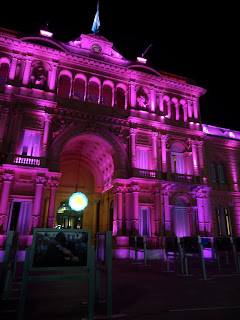
While I was not near as impressed with the Parisian architecture of BA as I had presumed, the city was delightful in many ways. The people, for one, were unbelievably friendly. Although Argentinians are typically regarded as selfish and egotistical throughout South America, I did not at all find that to be the case. Everyone was more than happy to have a chat! Second, I was inspired by the Argentinian spirit of revolution. Given that everyone was so open for discussion, it was easy to get into the psyche of a Latin country with a strong belief in the opportunity of the future. Young Argentinians I met were hopeful and whether educated or not seemed to feel they had control over their futures. So very different from my Paraguayan friends rather doomed or struggling view of life. I ventured to ask the older generation if they felt the same, and although they were less bright-eyed, they talked of revolution and one's right to protest to get and maintain what is theirs. Indeed, virtually every day I was in BA there was some sort of demonstration in the plaza in front of the Casa Rosada (the Argentinian version of the White House). I thought of my life in the USA, too comfortable to feel a need to protest. I thought of my life in Paraguay, we didn't have water all summer due to a political disagreement and nobody wanted to say anything much less fight for one's basic right to the very water they pay for and need to sustain daily life. Not in Argentina- I left the capital with my heart on fire, wanting to start a revolution too.
Patagonia- Wilderness of Wildlife: Heaven
There are few places in the world where I want to be able to call my home. Patagonia makes it onto that list. For some crazy reason, I had not realized before getting onto the plane (my first plane ride in nearly 2 years) that Patagonia is in large part a desert. From the sky it appears an endless sea of brown, a large plain only broken by the occasional river running down from distant mountains and the crackled coast of the Atlantic Ocean. Having lived practically my entire life in New Mexico, Patagonia looked like home. My first pit-stop, and really only a touchdown in the plane was at Ushuaia at the "bottom of the world." Although I didn't get to stop in at the time for a gander, I already know I want to go back. Gorgeous snow-covered mountains and deep blue and celeste ocean inlets, beautiful birds, and a quaint little town- why not? Then to my first real destination- El Calafate.
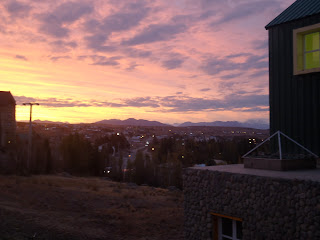
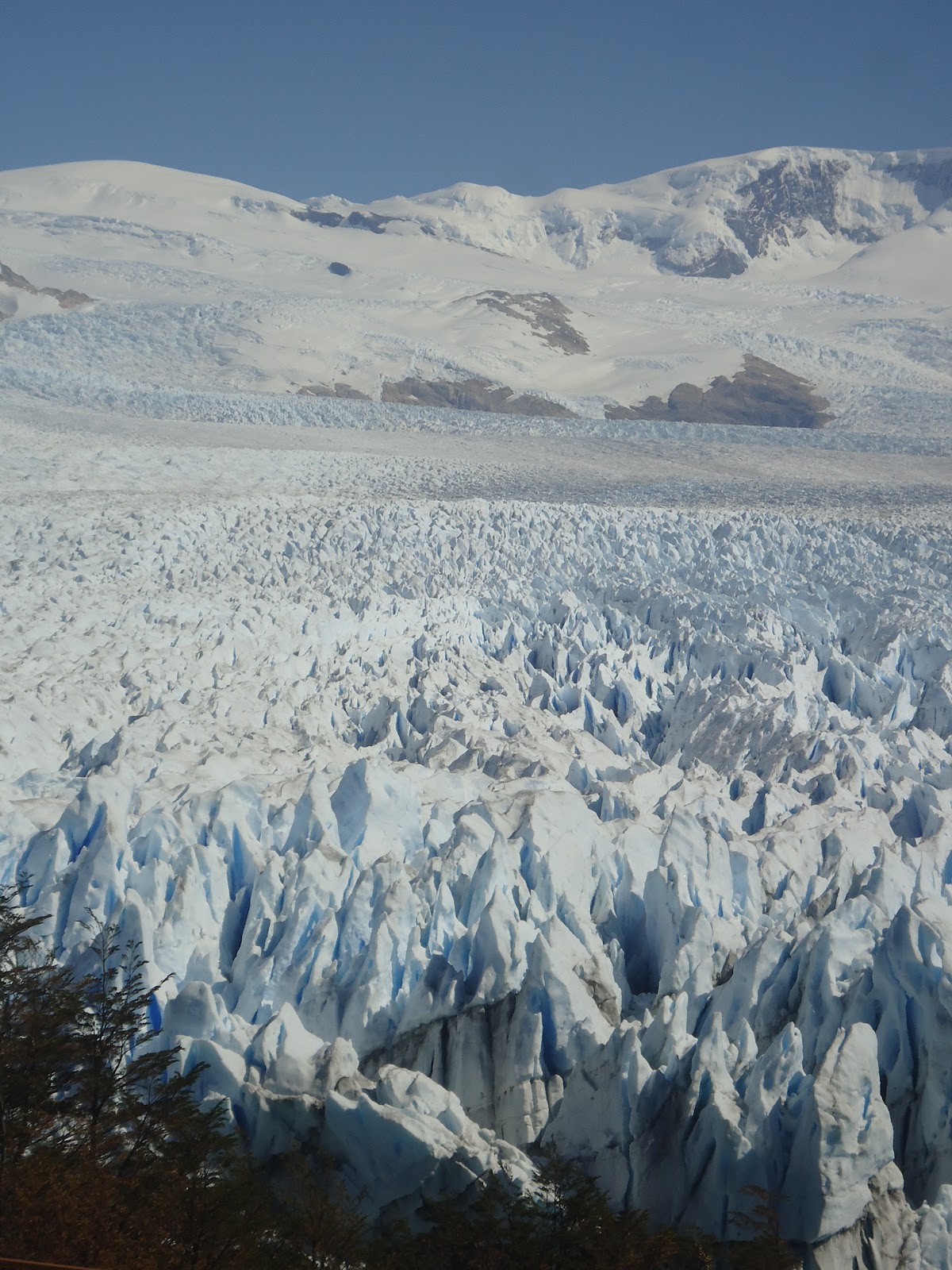
If from the air I could draw similarities to my home in the US, on the ground things became even more drastically similar. The first thing I noticed were the trees- poplars much like the aspens of the Jemez mountains, then the big glacier lakes like many back home surrounded by rocky brown hills, then the endless blue sky. Wow, simply amazing in every way. The people, though, were in indeed different. There appeared to be a rather big emo movement amongst the youth at the time and also a small but big town feel. Most of the population, I would later learn, only lives down this far south for half the year while the tourists are in. The main attraction in this particular part of Patagonia is the Perito Moreno Glacier about 80k outside town. I headed out my first full day in town for a peek- and I was completely taken away with the sheer power and mass of this still growing wall of ice. Gorgeous... Spectacular... Breathtaking... it was the most gorgeous site I've seen only even remotely comparable with Iguazu Falls and possibly even beyond that level of beauty and awe. Towering spires of crystal-blue ice cascading over blue-green waters, fresh air and sun-rays reflecting off your cheeks. My heart was racing practically from the moment I stepped off the bus. With truly ideal weather, I could see the mountains clearly in the distance. With hours to spend waiting for the ice to crack and fall into waves on the lake, I had much time for self-reflection and chats with strangers and fellow travelers on the trail. When the ice finally did break-up slightly, the sound resonated throughout the canyons and off the surrounding mountains. I felt unbelievably alive. At times I sat and listened to music, just breathing an air so light and fresh that I could almost float. On the ride home, I thought of all the ways I might somehow move to Patagonia. I spent the next days chatting, hiking, dancing, and prowling the city with the hostel employees almost imagining what life could be like in such a world.


My next stop was just over the border in Chile at Puerto Natales. A long bus ride with rather wild border checks brought me into the small tourist and fishing town at nearly midnight, just enough time to plan a wild adventure to Las Torres in the morning. At 5:30am, I was up and stretching for the first leg of my adventure which was sadly shorter than I had wanted due to my travel delays on the border. That day, I opted to go on a bus tour of the park to get the "big picture" of the scenery and understand more broadly where I would be staying and hiking the next day. Rather sleepy, I managed to scrape together food for the trip (thank you to all the campers and hikers that contributed!!!) and met up with Nino the tour guide. We headed around to the park's western entrance, viewing the mountains and glaciers from afar, taking small hikes, and snapping pictures of the wildlife. The condors, guanacos, and foxes were out in ridiculous numbers some even more than happy to pose for a pic or occasionally steal your lunch. Sadly, the park had burned in December due to a tourist-started fire outside the designated areas. It had spread across much of the western sections of the park, charing the hillsides and ravines. Another similarity to my home in NM, I too have lost my mountains to fires. As we crossed the park from west to east, I felt more and more at home. Finally, we arrived at the end of the tour and I hoped off with two ladies from Holland to start my backpacking/hiking adventure inside the park. I snuck in at a refugio with, by the way, the most comfortable beds on the planet and practiced some centering yoga before climbing in to sleep in preparation for the Las Torres "I" trek the next day, up and down from the Torres del Paine all in one sweep. With an early start the next morning, I was off hauling fast of the mountain. The first stretch was hot and hilly for about 2 hours but left me motivated when I reached the first campsite Chileno. From there it was a slight grade with greenery and trees across a canyon connecting two mountains. I was so pleased to see moss covered trees and to listen to the rustle of the wind through the seasonal leaves, I literally went tree hugging. Finally, I hit the last 45 minute straight upshot to the look-out, tough but thankfully short so manageable in the end. The prize- a beautiful view of Las Torres, three rock spires shooting to the sky with a pristine green-blue glacier lake below. Oh yes, and a confidence booster as I may actually be in shape for the first time in my life- I was not even all the tired for lunch at the peak. Too bad that on the way down my knees felt about to go- darn, maybe I am getting older after all. On my way back to the bus stop to leave the park, I was most kindly picked up by a lovely young French couple headed out to a section of the park I'd not yet visited. They were ever so gracious in offering to allow me to come along for the ride before my bus pulled in that evening to Lago Azul and Salto Paine. While the scenery was indeed beautiful, the highlight and real thrill of the trip was a chance sighting of a puma family! Most people come to the park and never manage to see pumas as they are fairly rare in the area- but this was my lucky day to not only see them but watch the cubs bat and play, and even take a few photos. The perfect ending to my wilderness venture.


My last day in Patagonia was very tranquil. I slept in at my hostel back in Puerto Natales and enjoyed the hot showers, chatted with fellow campers, and attended some talks at the base camp on the best way to tackle the "W" and "O" challenge on my next round. Yes- I will be back to Patagonia. It's like home, but even better!
Santiago and Valparaiso- It can't be Reined
My first impression as I came into Chile's political capital and central hub was that Santiago is HUGE. The only reason this city will ever stop growing is the mountains surrounding it on all four sides. My second impression was that Santiago is in many ways more the real 'Paris of Latin America' than Buenos Aires with its frequent and well preserved colonial architecture (albeit not particularly Parisian in style). Even with earthquakes and battles every few years, they have maintained the feeling of an old colonial city like Europe but with great public services. Maybe it is for this reason that the city is full of European (usually) exchange students, many of whom were staying in my hostel and searching out apartments. It gave my experience of the city a whole new twist, as often I got involved and interested in the search as if I too were moving in.
My first full day in the city, I decided to take a walking tour of the center to get my bearings. This ended up being a great way to get to know the history (much more so than visiting the museum which strangely ends its version of history in 1973), food, and culture of Chile. For example, I learned that Chile was actually a very hard base to conquer for the Spanish due to the extraordinarily strong Mapuche people. Although not originally well organized, these indigenous groups fought tough psychological warfare not giving in for over 200 years to occupation. Impressive, this is not how most Latin American indigenous groups fared. The statues in the main Plaza de Armas show the 1st Spanish governor on a horse without reigns juxtaposed with the faceless indigenous leader that struggled so valiantly against the invaders from the inside out. I found myself routing silently for the Mapuche as present day drums of protests beat in the distance. We also checked out the presidential palace that was bombed in 1973 in the US-backed coup to overthrow the communist Allende by future dictator Pinochet and his fellow generals. Sadly, the memory museum was closed during my visit, but our tour guide revealed that Chile's inhabitants are still not really dealing with what happened during Pinochet's rule... disappearances, torture, and the like. On the fun side, I got to try Chile's mote con huesillos, honey-roasted peanuts, the teremoto, every-flavor ice cream, charrillo, pastel de choclo, and the best beer I have had since I left the US. There are many fun avenues to eat out and party in Santiago: BellaVista for the students, Provedencia for the high class, and Brasil with a family feel. After a few more days in the capital, I realized the city was not all that outstanding for tourism but I love Santiago's vibe.


On my way out of the region, I decided to take just a day trip to Valparaiso. This city is a totally different story, full of tourists and artists clinging to the magic of a city enveloped in winding roads and staircases with old ascensores. Yes, it was beautiful- perfect for a picture from every angle. That said, with its open air markets on many streets spilling out into traffic, people yelling and haggling you at every corner, cat calls, and all the tightly packed buildings... it was pretty overwhelming. I visited a few sites around town such as the Neruda Museum, the Open Air Museum, and of course took an ascensor ride. I even modeled for a portrait artist randomly, until I guess he got frustrated or something and rather stormed off. Weird. The highlight of the trip was a big meal of ceviche right there looking out to the water. Full and tired, I was happy to get on a bus for a mountain adventure across the Andes and back to Argentina.

Mendoza- Wine Country
Returning to the eastern side of the Andes was a shock to my system initially as the culture here is much more akin to the Latin America I know. Odd how one begins to miss that laid-back and tranquilo culture. My first night in Mendoza was the last night of the Fiesta de la Vendimia, so I got together with a friend from Holland who I'd met in Santiago and started the long walk to the venue. Warned that the tickets were sold out, I'd learned that in typical Latin fashion we could still go and watch from the amphitheater's surrounding hills. By the time we reached the far side of San Martin Park and followed the flow of people to the event, we had already missed some of the cultural dances and such, but we did make it in time for the rock bands! Passing by the main entrance, we started to climb up the steep and crumbly hills to join a crowd of literally thousands of excited fans outnumbering for sure the people in paid seats below. And what a blast the crowd was! We snuggled up between a few camps of locals and perched on some rocks in the sand, immediately in neighborly fashion we were included on the wine circle with the group beside us. Perfect. My favorite part was watching everyone dance, jumping around with hands in the air. THIS is the Latin America I am used to. My friend from Holland was both shocked and thrilled by the scene, "I can't believe they even set up a screen for the masses in the hills... if this place was at home there'd be hooligans and police all over... look at how friendly people are!" Funny, this type of thing I've just come to take for granted. Isn't it great though?


The rest of my trip in Mendoza was pretty standard and high fun. I visited many wineries in Maipú on a biking tour. Not sure who thought up that idea... bikes and wine. But hey- you can't beat drinking wine at Tempus Alba, Mevi, and DiTommaso right out above their wine fields. My favorite wines were fresh Malbecs, Tempranillo, and the usual Syrah and Cabernet. Mendoza is known for its red wines, so the white were really not so spectacular. I learned a lot about processing wine from fermenting to oak barrels (French vs American) and then back to stainless steel. A couple that came along for the ride is hoping to start a winery in Washington, so there were loads of questions and strategizing. I also learned something really neat and pretty useful- the longer a wine is in oak the stronger the flavor and the longer you can store it. So "young" wines should be drank within 2 years, "old" wines left in oak for 6 months should be drank within 4-5 years, and wines in oak for a year should be drank in 7-8 years. Check that out! So maybe we shouldn't be all about the 1942 vintage bottle after all. I didn't just stick to the wine scene though in Mendoza, I also headed out to the PreColombian mountains for a half-day of hiking and rappelling. We got to the base camp in the dry, desert, mountains- again a flashback from home- after an hour or so of driving. The plants were actually greener in NM and the mountain runoff a welcome and continuous trickle. We trekked out to a small waterfall surrounded by Andean hills, above the frontal Andes and below the rushing Mendoza river. I rappelled a very small drop, the hardest part just getting over the cliffside. Not the adrenaline rush I'd expected, but great natural beauty and exploration. More wine back at the hostel and an interesting discussion about mate culture in Argentina vs Paraguay, and I was ready to head out.


Córdoba- Jesuit Life
Approaching the end of my trip, Córdoba was my last destination. I had heard that the place was quite fun by other PCVs and thought I should give it a chance although I really had no idea what I was getting into. I should have known that Córdoba is all about the nightlife when I got into my hostel at noon and practically everyone was still asleep. Hmm... not really my style. So then, what else could I do but check out all the Jesuit ruins and sites in and around the area? What is really impressive about these sites in Córdoba is the outstanding architecture and the present day use of churches, schools, town halls all build back in the 1600s. The Jesuit College in the center of town seems like something out of Harry Potter and ancient English history books versus a modern Argentinian city. On one of my day trips out to Alta Garcia, I toured a Jesuit church and homestead/ranch. Two things shocked me about their culture in particular: 1) how technologically advanced they were- a fresh water reservoir built beside the church with pumps, a flushing toilet (you must see it to believe it- kinda Roman style), and ironworking, and 2) their use of slave labor at a 200 slave to 5 Jesuit rate. All this made me think to the Jesuit culture in Paraguay near Encarnación. It is amazing to see how such things manage to thrive in Argentina but in Paraguay go forgotten.

Reflections
All in all, my trip was a much needed vacation and the perfect balance of wildlife and cities. There are still many things I want to see in Argentina and Chile. One day I must go back.
Over the last several weeks, I have been on travel in my last two countries south of Paraguay- Argentina and Chile. Although I had been on a vacation rather recently to Brazil, I really needed the break. It had been a very long Thanksgiving to New Years season- full of sadness, celebration, excitement, and action. So, after getting stuck in site one last time due to mud, I made it to Encarnación to start off my adventure south-bound with an overnight bus in the rain to BA.
Buenos Aires- The Revolution
After 15 hours beside a young Argentinian- I was already getting used to the "che" and "ja" thrown in all over their accent. My first day in the Paris of Latin America was rather shot due to my late arrival but I managed to meet a friend at the hostel from Patagonia and we went out for the most delicious salad I have had in well over 2 years. That night I hung out with the hostel crowd eating asado on the parrilla (BBQ) which proved that indeed the meat in Argentina is of the highest quality. Free wine with dinner, no carnival surprisingly as it was the season- so off to bed. Day two proved to be quite fun with a long walk and exploration around Polermo- the recolecta, museum of fine arts, paddle boats and the city rose garden. The best part was hanging out with a friendly English fellow which whom I could debate and discuss anything from artificial intelligence to development critique. Truly a fun day! My last day, I headed down to the Chacarita and then went out with an Argentinian friend I had met in Uruguay for a tour of downtown. Although a rather rushed visit to the capital- I feel I had a real whirlwind tour of the key spots!


While I was not near as impressed with the Parisian architecture of BA as I had presumed, the city was delightful in many ways. The people, for one, were unbelievably friendly. Although Argentinians are typically regarded as selfish and egotistical throughout South America, I did not at all find that to be the case. Everyone was more than happy to have a chat! Second, I was inspired by the Argentinian spirit of revolution. Given that everyone was so open for discussion, it was easy to get into the psyche of a Latin country with a strong belief in the opportunity of the future. Young Argentinians I met were hopeful and whether educated or not seemed to feel they had control over their futures. So very different from my Paraguayan friends rather doomed or struggling view of life. I ventured to ask the older generation if they felt the same, and although they were less bright-eyed, they talked of revolution and one's right to protest to get and maintain what is theirs. Indeed, virtually every day I was in BA there was some sort of demonstration in the plaza in front of the Casa Rosada (the Argentinian version of the White House). I thought of my life in the USA, too comfortable to feel a need to protest. I thought of my life in Paraguay, we didn't have water all summer due to a political disagreement and nobody wanted to say anything much less fight for one's basic right to the very water they pay for and need to sustain daily life. Not in Argentina- I left the capital with my heart on fire, wanting to start a revolution too.
Patagonia- Wilderness of Wildlife: Heaven
There are few places in the world where I want to be able to call my home. Patagonia makes it onto that list. For some crazy reason, I had not realized before getting onto the plane (my first plane ride in nearly 2 years) that Patagonia is in large part a desert. From the sky it appears an endless sea of brown, a large plain only broken by the occasional river running down from distant mountains and the crackled coast of the Atlantic Ocean. Having lived practically my entire life in New Mexico, Patagonia looked like home. My first pit-stop, and really only a touchdown in the plane was at Ushuaia at the "bottom of the world." Although I didn't get to stop in at the time for a gander, I already know I want to go back. Gorgeous snow-covered mountains and deep blue and celeste ocean inlets, beautiful birds, and a quaint little town- why not? Then to my first real destination- El Calafate.

If from the air I could draw similarities to my home in the US, on the ground things became even more drastically similar. The first thing I noticed were the trees- poplars much like the aspens of the Jemez mountains, then the big glacier lakes like many back home surrounded by rocky brown hills, then the endless blue sky. Wow, simply amazing in every way. The people, though, were in indeed different. There appeared to be a rather big emo movement amongst the youth at the time and also a small but big town feel. Most of the population, I would later learn, only lives down this far south for half the year while the tourists are in. The main attraction in this particular part of Patagonia is the Perito Moreno Glacier about 80k outside town. I headed out my first full day in town for a peek- and I was completely taken away with the sheer power and mass of this still growing wall of ice. Gorgeous... Spectacular... Breathtaking... it was the most gorgeous site I've seen only even remotely comparable with Iguazu Falls and possibly even beyond that level of beauty and awe. Towering spires of crystal-blue ice cascading over blue-green waters, fresh air and sun-rays reflecting off your cheeks. My heart was racing practically from the moment I stepped off the bus. With truly ideal weather, I could see the mountains clearly in the distance. With hours to spend waiting for the ice to crack and fall into waves on the lake, I had much time for self-reflection and chats with strangers and fellow travelers on the trail. When the ice finally did break-up slightly, the sound resonated throughout the canyons and off the surrounding mountains. I felt unbelievably alive. At times I sat and listened to music, just breathing an air so light and fresh that I could almost float. On the ride home, I thought of all the ways I might somehow move to Patagonia. I spent the next days chatting, hiking, dancing, and prowling the city with the hostel employees almost imagining what life could be like in such a world.


My next stop was just over the border in Chile at Puerto Natales. A long bus ride with rather wild border checks brought me into the small tourist and fishing town at nearly midnight, just enough time to plan a wild adventure to Las Torres in the morning. At 5:30am, I was up and stretching for the first leg of my adventure which was sadly shorter than I had wanted due to my travel delays on the border. That day, I opted to go on a bus tour of the park to get the "big picture" of the scenery and understand more broadly where I would be staying and hiking the next day. Rather sleepy, I managed to scrape together food for the trip (thank you to all the campers and hikers that contributed!!!) and met up with Nino the tour guide. We headed around to the park's western entrance, viewing the mountains and glaciers from afar, taking small hikes, and snapping pictures of the wildlife. The condors, guanacos, and foxes were out in ridiculous numbers some even more than happy to pose for a pic or occasionally steal your lunch. Sadly, the park had burned in December due to a tourist-started fire outside the designated areas. It had spread across much of the western sections of the park, charing the hillsides and ravines. Another similarity to my home in NM, I too have lost my mountains to fires. As we crossed the park from west to east, I felt more and more at home. Finally, we arrived at the end of the tour and I hoped off with two ladies from Holland to start my backpacking/hiking adventure inside the park. I snuck in at a refugio with, by the way, the most comfortable beds on the planet and practiced some centering yoga before climbing in to sleep in preparation for the Las Torres "I" trek the next day, up and down from the Torres del Paine all in one sweep. With an early start the next morning, I was off hauling fast of the mountain. The first stretch was hot and hilly for about 2 hours but left me motivated when I reached the first campsite Chileno. From there it was a slight grade with greenery and trees across a canyon connecting two mountains. I was so pleased to see moss covered trees and to listen to the rustle of the wind through the seasonal leaves, I literally went tree hugging. Finally, I hit the last 45 minute straight upshot to the look-out, tough but thankfully short so manageable in the end. The prize- a beautiful view of Las Torres, three rock spires shooting to the sky with a pristine green-blue glacier lake below. Oh yes, and a confidence booster as I may actually be in shape for the first time in my life- I was not even all the tired for lunch at the peak. Too bad that on the way down my knees felt about to go- darn, maybe I am getting older after all. On my way back to the bus stop to leave the park, I was most kindly picked up by a lovely young French couple headed out to a section of the park I'd not yet visited. They were ever so gracious in offering to allow me to come along for the ride before my bus pulled in that evening to Lago Azul and Salto Paine. While the scenery was indeed beautiful, the highlight and real thrill of the trip was a chance sighting of a puma family! Most people come to the park and never manage to see pumas as they are fairly rare in the area- but this was my lucky day to not only see them but watch the cubs bat and play, and even take a few photos. The perfect ending to my wilderness venture.


My last day in Patagonia was very tranquil. I slept in at my hostel back in Puerto Natales and enjoyed the hot showers, chatted with fellow campers, and attended some talks at the base camp on the best way to tackle the "W" and "O" challenge on my next round. Yes- I will be back to Patagonia. It's like home, but even better!
Santiago and Valparaiso- It can't be Reined
My first impression as I came into Chile's political capital and central hub was that Santiago is HUGE. The only reason this city will ever stop growing is the mountains surrounding it on all four sides. My second impression was that Santiago is in many ways more the real 'Paris of Latin America' than Buenos Aires with its frequent and well preserved colonial architecture (albeit not particularly Parisian in style). Even with earthquakes and battles every few years, they have maintained the feeling of an old colonial city like Europe but with great public services. Maybe it is for this reason that the city is full of European (usually) exchange students, many of whom were staying in my hostel and searching out apartments. It gave my experience of the city a whole new twist, as often I got involved and interested in the search as if I too were moving in.
My first full day in the city, I decided to take a walking tour of the center to get my bearings. This ended up being a great way to get to know the history (much more so than visiting the museum which strangely ends its version of history in 1973), food, and culture of Chile. For example, I learned that Chile was actually a very hard base to conquer for the Spanish due to the extraordinarily strong Mapuche people. Although not originally well organized, these indigenous groups fought tough psychological warfare not giving in for over 200 years to occupation. Impressive, this is not how most Latin American indigenous groups fared. The statues in the main Plaza de Armas show the 1st Spanish governor on a horse without reigns juxtaposed with the faceless indigenous leader that struggled so valiantly against the invaders from the inside out. I found myself routing silently for the Mapuche as present day drums of protests beat in the distance. We also checked out the presidential palace that was bombed in 1973 in the US-backed coup to overthrow the communist Allende by future dictator Pinochet and his fellow generals. Sadly, the memory museum was closed during my visit, but our tour guide revealed that Chile's inhabitants are still not really dealing with what happened during Pinochet's rule... disappearances, torture, and the like. On the fun side, I got to try Chile's mote con huesillos, honey-roasted peanuts, the teremoto, every-flavor ice cream, charrillo, pastel de choclo, and the best beer I have had since I left the US. There are many fun avenues to eat out and party in Santiago: BellaVista for the students, Provedencia for the high class, and Brasil with a family feel. After a few more days in the capital, I realized the city was not all that outstanding for tourism but I love Santiago's vibe.
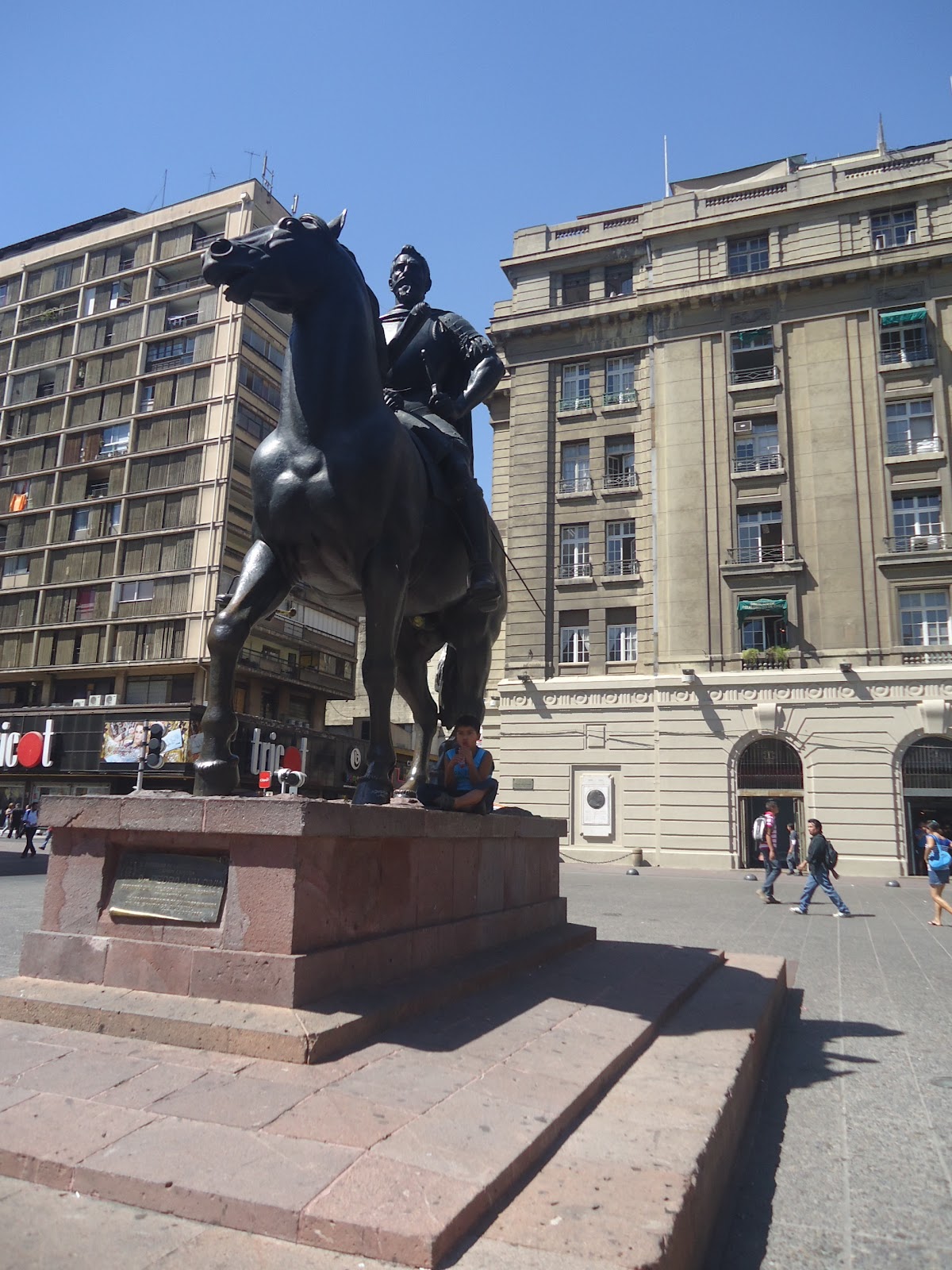


On my way out of the region, I decided to take just a day trip to Valparaiso. This city is a totally different story, full of tourists and artists clinging to the magic of a city enveloped in winding roads and staircases with old ascensores. Yes, it was beautiful- perfect for a picture from every angle. That said, with its open air markets on many streets spilling out into traffic, people yelling and haggling you at every corner, cat calls, and all the tightly packed buildings... it was pretty overwhelming. I visited a few sites around town such as the Neruda Museum, the Open Air Museum, and of course took an ascensor ride. I even modeled for a portrait artist randomly, until I guess he got frustrated or something and rather stormed off. Weird. The highlight of the trip was a big meal of ceviche right there looking out to the water. Full and tired, I was happy to get on a bus for a mountain adventure across the Andes and back to Argentina.

Mendoza- Wine Country
Returning to the eastern side of the Andes was a shock to my system initially as the culture here is much more akin to the Latin America I know. Odd how one begins to miss that laid-back and tranquilo culture. My first night in Mendoza was the last night of the Fiesta de la Vendimia, so I got together with a friend from Holland who I'd met in Santiago and started the long walk to the venue. Warned that the tickets were sold out, I'd learned that in typical Latin fashion we could still go and watch from the amphitheater's surrounding hills. By the time we reached the far side of San Martin Park and followed the flow of people to the event, we had already missed some of the cultural dances and such, but we did make it in time for the rock bands! Passing by the main entrance, we started to climb up the steep and crumbly hills to join a crowd of literally thousands of excited fans outnumbering for sure the people in paid seats below. And what a blast the crowd was! We snuggled up between a few camps of locals and perched on some rocks in the sand, immediately in neighborly fashion we were included on the wine circle with the group beside us. Perfect. My favorite part was watching everyone dance, jumping around with hands in the air. THIS is the Latin America I am used to. My friend from Holland was both shocked and thrilled by the scene, "I can't believe they even set up a screen for the masses in the hills... if this place was at home there'd be hooligans and police all over... look at how friendly people are!" Funny, this type of thing I've just come to take for granted. Isn't it great though?


The rest of my trip in Mendoza was pretty standard and high fun. I visited many wineries in Maipú on a biking tour. Not sure who thought up that idea... bikes and wine. But hey- you can't beat drinking wine at Tempus Alba, Mevi, and DiTommaso right out above their wine fields. My favorite wines were fresh Malbecs, Tempranillo, and the usual Syrah and Cabernet. Mendoza is known for its red wines, so the white were really not so spectacular. I learned a lot about processing wine from fermenting to oak barrels (French vs American) and then back to stainless steel. A couple that came along for the ride is hoping to start a winery in Washington, so there were loads of questions and strategizing. I also learned something really neat and pretty useful- the longer a wine is in oak the stronger the flavor and the longer you can store it. So "young" wines should be drank within 2 years, "old" wines left in oak for 6 months should be drank within 4-5 years, and wines in oak for a year should be drank in 7-8 years. Check that out! So maybe we shouldn't be all about the 1942 vintage bottle after all. I didn't just stick to the wine scene though in Mendoza, I also headed out to the PreColombian mountains for a half-day of hiking and rappelling. We got to the base camp in the dry, desert, mountains- again a flashback from home- after an hour or so of driving. The plants were actually greener in NM and the mountain runoff a welcome and continuous trickle. We trekked out to a small waterfall surrounded by Andean hills, above the frontal Andes and below the rushing Mendoza river. I rappelled a very small drop, the hardest part just getting over the cliffside. Not the adrenaline rush I'd expected, but great natural beauty and exploration. More wine back at the hostel and an interesting discussion about mate culture in Argentina vs Paraguay, and I was ready to head out.


Córdoba- Jesuit Life
Approaching the end of my trip, Córdoba was my last destination. I had heard that the place was quite fun by other PCVs and thought I should give it a chance although I really had no idea what I was getting into. I should have known that Córdoba is all about the nightlife when I got into my hostel at noon and practically everyone was still asleep. Hmm... not really my style. So then, what else could I do but check out all the Jesuit ruins and sites in and around the area? What is really impressive about these sites in Córdoba is the outstanding architecture and the present day use of churches, schools, town halls all build back in the 1600s. The Jesuit College in the center of town seems like something out of Harry Potter and ancient English history books versus a modern Argentinian city. On one of my day trips out to Alta Garcia, I toured a Jesuit church and homestead/ranch. Two things shocked me about their culture in particular: 1) how technologically advanced they were- a fresh water reservoir built beside the church with pumps, a flushing toilet (you must see it to believe it- kinda Roman style), and ironworking, and 2) their use of slave labor at a 200 slave to 5 Jesuit rate. All this made me think to the Jesuit culture in Paraguay near Encarnación. It is amazing to see how such things manage to thrive in Argentina but in Paraguay go forgotten.

Reflections
All in all, my trip was a much needed vacation and the perfect balance of wildlife and cities. There are still many things I want to see in Argentina and Chile. One day I must go back.
Sunday, February 12, 2012
Paciencia y Respeto
Knowledge transfer and interaction with people different from myself is something that I do on a daily basis as a Peace Corps Volunteer. In fact, I can think of so many examples that I find it hard to give any one concrete sample.
But let me use an example of my friend "Fulano," a country-boy from the surrounding suburbs of my small rural community in Paraguay. Fulano is a 20-something that comes from a fairly poor, rural background in a developing country- but has dreams of doing bigger things. I met him at first as a member of my neighborhood youth group and our first conversation revolved around where I’d travelled in the world for my young age. Fulano has rarely seen a world map, much less even thinks of visiting such far off places as Asuncion the country's capital. So when I pull out my list of countries I’ve visited he can barely grasp the reality, “Does everyone speak Spanish in the USA? Wow look at those "chinas" he remarks while I show pictures of Korea. Muslims and Israelis- those are the same right? Did you take a bus to get here?” Each conversation, I was teaching this young man about the geography, culture, and the world outside our pueblo. As our time in youth group developed into his becoming a volunteer at our local soup kitchen and later a good friend, I began to help him with his computer projects working in word, power-point, and the internet. I even helped him to work out various plans of action on gaining approval of his fiancée’s stubborn father wishing more for his daughter than a poor but wide-eyed country-boy. There is never a lack of opportunities to teach in Paraguay.
In the process of teaching, working, and conversing with "Fulano," I learned that I have a lot of patience. It is not easy to deal with what sometimes you feel are silly questions or go over time and again where the “w” is on the keyboard. That said, I also learned that I have a lot to learn from Fulano- just how difficult it is to overcome poverty in the developing world, Spanish/Guarani, how to use local remedies, etc. I learned that no matter who one is or where he/she is born, world-traveler or so-called “nobody” that we all have something to offer another… at minimum respect.
Sunday, January 22, 2012
Voluntad y Jóvenes
The jóvenes (youth) beneficiaries attending the comedor comunitario (soup kitchen) are at times a really frustrating and dismal bunch. Educationally, over 33% of our kids are not in school and the majority are these are my teens. Personally, they are rumored to be some of the worst behaved kids in town whether making poor sexual choices starting as minors or involved in drugs/robbery. Professionally, they are only 20% Spanish speaking and ill-equipt to enter the job market in anything but house cleaning or construction help with a maximum income of 300.000Gs. (less than $100US) monthly. It is a sad case and even harder to stomach when they are so hard to reach much less gain in confidence.
Back in October, it was decided that all jóvenes ages 12 and up would now have to volunteer in the comedor to receive its benefits and services so as not to create a false sense of dependency in young adults (and because donors to the comedor were refusing to donate to misbehaving street teens without some greater cause). That first month, only two or three jóvenes decided to stick around and others decided it would be better to harass the kids from outside. The rules were outlined, we work- then we eat, and a volunteer role chart was hung to organize the volunteers. But it was not an easy task, kids were sneaking food out on stolen plates to older siblings and volunteers were frustrated with the inside/outside inequalities. Even the cooks and commission members were ready to break, and this rule was voted in by them! We had had enough! It was time to play the carrot and stick. Our carrot- the jóvenes that helped me as volunteers regularly would be permitted to participate in my Ahecha photography course. Out stick- nobody won't eat REALLY until the work is done. The adults finalized the plan, and this time we wouldn't be slack.
After one more month, at times sticky due to difficult teen attitudes, we had a strong team of youth volunteers that were once our thankless beneficiaries not only helping out in an orderly fashion but also learning skills in leadership, service, and teamwork. Those in the Ahecha class even had the opportunity to learn how to use the camera, some practice desperately needed writing poems and paragraphs which is rarely done at home or even in school, and received their first ever certificado (one girl said that she was going to frame it and put it on her wall- she had dropped out of school a couple of years ago to help out in the house and this might be one of the few she will ever have). Now the teens actually complete for jobs they want that day instead of complaining about them, and they have a lovely time to chat afterwards with the adult staff at their own private lunch table. It was tough on the adults to be a bit more fuerte (strong/firm) with our discipline, but the carrot and the stick seem to have worked wonders so far- and I hope we can keep making differences in the lives of these jóvenes for months and years to come.
Monday, January 9, 2012
Super Enferma
As a Peace Corps volunteer in Paraguay, I’ve developed many close relationships with my friends, neighbors and coworkers- and days when I’m feeling down or ill they are more than willing to offer a helping-hand. However, a Paraguayan’s help on your sick day may not be what you thought you were getting yourself into.
Recently when I was dealing with the flu followed-by (or perhaps with) giardia- my boyfriend José decided to come over for what seemed like a short-notice party. He brought movies and friends and food…. And all I could think was, “Didn’t I tell you guys I was sick? I just want to sleep!” Trying not to be rude, I cooked up the food running to the bathroom every 15 minutes and tried to struggle through YouTube funny video sessions until I was ready to cry- “Guys please, I’m so tired- no more movies! I’d really like to go to bed!” The next week José was sick, and thinking of how miserable I felt I brought him soup and left him in bed to rest. Within an hour, José was furious with me- “how could you leave me alone when I am feeling so sick?” Completely confused, we decided to talk it out once we were all better.
As it turns out, when José was a child his mom would invite over friends and family when he was sick to give him company (as most Paraguayans would do), whereas when I was a child my mom would give me soup and tuck me in to sleep (as most Americans would do). Thus the root of the misunderstanding and also a way to resolve the problem- when I’m sick he now knows to let me sleep in silence with an occasional wake for tea, when he’s sick I know it is time to plan a party :-)
Even on a sick day, don't think you're free of those little cultural moments!
Recently when I was dealing with the flu followed-by (or perhaps with) giardia- my boyfriend José decided to come over for what seemed like a short-notice party. He brought movies and friends and food…. And all I could think was, “Didn’t I tell you guys I was sick? I just want to sleep!” Trying not to be rude, I cooked up the food running to the bathroom every 15 minutes and tried to struggle through YouTube funny video sessions until I was ready to cry- “Guys please, I’m so tired- no more movies! I’d really like to go to bed!” The next week José was sick, and thinking of how miserable I felt I brought him soup and left him in bed to rest. Within an hour, José was furious with me- “how could you leave me alone when I am feeling so sick?” Completely confused, we decided to talk it out once we were all better.
As it turns out, when José was a child his mom would invite over friends and family when he was sick to give him company (as most Paraguayans would do), whereas when I was a child my mom would give me soup and tuck me in to sleep (as most Americans would do). Thus the root of the misunderstanding and also a way to resolve the problem- when I’m sick he now knows to let me sleep in silence with an occasional wake for tea, when he’s sick I know it is time to plan a party :-)
Even on a sick day, don't think you're free of those little cultural moments!
Thursday, December 29, 2011
Ahecha
Throughout November and December, I had the opportunity to teach a Peace Corps Paraguay photography course called "Ahecha" with approximately 30 youth and adults from my community. Although my community is rather large for rural Paraguay, most of my students do not own their own camera and even more have never had the opportunity to use one. So, this was a real exciting chance for my community members to take advantage of 5 digital cameras available for use during class and a rotation to take the cameras home and snap a few shots. Here are some of the topics we covered:
- How to use a Digital Camera
- What is a Photo?
- Basic Photograph Components- light, frame, perspective, moment
- Photo Analysis- poetry, descriptions, feelings, design
- Portraits & Self Portraits
- Landscapes
- Movement
- Black & White vs. Color
- Advertising & Marketing Photography
Subscribe to:
Comments (Atom)